In this article · 8 sections
- How many hours of sleep do you need for longevity?
- Does sleep affect lifespan, or is it just correlation?
- Why does sleep regularity matter as much as hours?
- Could sleep apnoea be quietly affecting your sleep?
- What does a practical sleep routine look like?
- What if stress is what keeps you awake?
- When should you talk to a doctor about your sleep?
- Frequently asked questions
For most adults, regular sleep of about 7 to 9 hours a night is associated with better health outcomes and a longer life. Both very short and very long sleep are linked to higher risks.
This is an association, not proof. Sleep is one part of a bigger picture, and how regular and how good your sleep is matters as much as the number of hours.
How many hours of sleep do you need for longevity?
Large studies that follow people over many years keep finding a similar pattern. Adults who sleep around 7 to 9 hours tend to have the lowest rates of heart disease, type 2 diabetes and early death. Risks rise at both ends: regularly sleeping under 6 hours, and regularly sleeping 9–10 hours or more.
| Usual sleep per night | What research tends to show |
|---|---|
| Under 6 hours | Associated with higher risks of heart and metabolic problems, low mood and poorer concentration |
| 6–7 hours | Fine for some people, but often a sign of a sleep debt that builds up |
| 7–9 hours | Associated with the best health outcomes for most adults |
| Over 9 hours, regularly | Associated with higher risks, often because of an underlying health issue rather than sleep itself |
Two points are worth keeping in mind.
- Needs differ. Some people feel well on 7 hours, others need closer to 9. A good sign is that you wake up without a struggle and stay alert during the day without relying on caffeine.
- Long sleep may be a signal, not a cause. If you suddenly need much more sleep than before, it is worth mentioning to your doctor. Long sleep in studies is often linked to illness, low mood or poor-quality sleep, not to the hours themselves.
Does sleep affect lifespan, or is it just correlation?
Honest answer: both are possible, and the research cannot fully separate them. Most evidence comes from observational studies, which follow groups of people and compare outcomes. They show that sleep patterns and health move together. They cannot show that changing your sleep will add years to your life.
What makes the link plausible is what we know about sleep itself. During sleep, the body is far from idle:
- Deep sleep is when the body does much of its physical recovery, and when levels of some hormones, including growth hormone, rise.
- REM sleep supports memory, learning and emotional balance.
- Appetite and blood sugar control are affected by sleep. After short nights, many people feel hungrier and crave sugar, and the body handles glucose less well.
- Stress hormones such as cortisol follow a daily rhythm that sleep helps keep in order.
- The brain appears to clear metabolic waste more actively during sleep. This is an area of active research, mostly in animals, so it is best treated as promising rather than settled.
Put together, it is reasonable to say that steady, good-quality sleep supports the foundations of long-term health, alongside food, movement, not smoking and social contact. It is not a magic switch, and poor sleep in one season of life is not a sentence.
Why does sleep regularity matter as much as hours?
Many people try to "catch up" at the weekend. Sleeping 5 hours on weekdays and 10 on Saturday may average out to a healthy number, but your body clock does not work on averages.
Research suggests that people with irregular sleep times, meaning bedtimes and wake times that jump around from day to day, tend to have worse metabolic and heart health than people with the same total hours who keep a steady schedule. Some studies have even found that regularity predicts health outcomes as well as, or better than, duration.
A practical way to use this:
- Choose a wake-up time you can keep on most days, including weekends.
- Let your bedtime follow from it, aiming for 7–9 hours in bed.
- Try to keep both within roughly 30 minutes of the same time. A bigger shift now and then is not a disaster, just not the aim.
Shift workers, new parents and frequent travellers cannot always do this. If that is your life, focus on the other habits below and protect one fixed anchor, such as morning daylight.
Could sleep apnoea be quietly affecting your sleep?
Sleep apnoea is a condition in which breathing repeatedly pauses or becomes shallow during sleep. People often do not know they have it, because the pauses are not remembered. It is common, and it is associated with daytime sleepiness, high blood pressure, heart rhythm problems and poorer concentration.
Consider asking a doctor for an assessment if you notice:
- loud, frequent snoring;
- pauses in breathing or gasping that a partner has seen;
- waking with a dry mouth, headache or a racing heart;
- heavy tiredness during the day despite a full night in bed.
Sleep apnoea needs a proper diagnosis, usually with a sleep study, and medical follow-up. No app or wearable can replace this. If any of the signs above sound familiar, please see a doctor before trying to improve your sleep with routines alone.
What does a practical sleep routine look like?
You do not need an elaborate protocol. Most of what helps is simple and costs nothing. Here is a routine built on widely accepted sleep advice.
| When | What to do | Why it helps |
|---|---|---|
| Morning | Get 10–30 minutes of outdoor daylight within the first hour or two of waking | Daylight anchors the body clock and supports sleepiness at night |
| Morning | Wake at the same time, within about 30 minutes, every day | Regularity strengthens your rhythm |
| Until early afternoon | Keep coffee and other caffeine to the first half of the day | Caffeine can stay active for many hours and delay sleep |
| Afternoon | Move your body; keep very intense exercise away from the last hour before bed | Daytime activity supports deeper sleep; late hard sessions can leave some people wired |
| Evening | Have your last large meal and alcohol well before bed | Alcohol may help you fall asleep but tends to fragment sleep and disturb REM |
| 1–2 hours before bed | Dim the lights and put screens away, or turn them down | Bright light in the evening can delay the body's signal to sleep |
| Bedtime | Keep the bedroom dark, quiet and cool, around 15–19°C | A cooler room supports the natural drop in body temperature at night |
| If you cannot sleep | After about 20 minutes, get up, do something calm in low light, and return when sleepy | Prevents the bed from becoming linked with frustration |
Change one or two things first. Habits that you keep for years do more than a perfect week you cannot sustain.
A word on trackers: wearables can give a rough picture of how long you sleep and how regular you are. Their sleep-stage readings are less precise. If a tracker makes you anxious about sleep, it is fine to put it away and go by how you feel.
What if stress is what keeps you awake?
For many people the problem is not the bedroom but the head: long working weeks, constant alertness, a mind that does not switch off. In that case, advice about curtains and caffeine only goes so far.
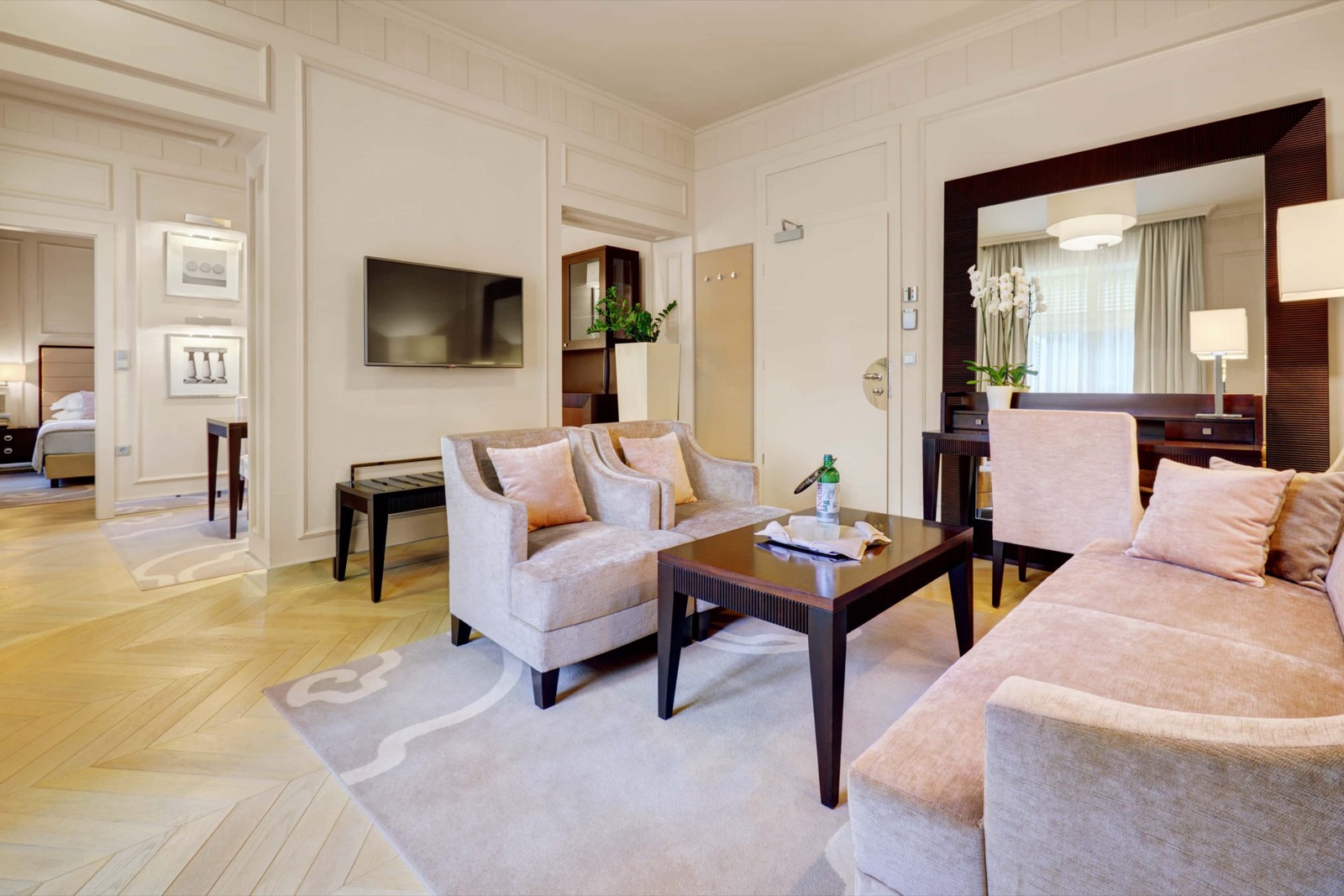
Our Hotel Aleksander is a 21-room, 5-star boutique hotel in Rogaška Slatina, Slovenia, rated 9.5 on Booking.com. Programmes there are led by the doctors of Revita Clinic, who work in the hotel. The Burnout Recovery & Anti-Stress programme is built around deep rest after a period of overload. It includes diagnostics, an IV infusion, hyperbaric oxygen therapy, floatation, massage, nutrition and quiet time, with the day planned for you. Prices start from €3,690 for 4 nights, accommodation included. A free transfer from Graz, Ljubljana or Zagreb airport is included with a medical programme.
A stay like this does not replace a sleep study or ongoing medical care, and nobody can promise a particular result for your sleep. What it can offer is a calm setting, a doctor's attention and a few days away from your usual triggers, which is a good moment to reset routines. You can see more about the hotel and what a stay is like.
When should you talk to a doctor about your sleep?
Habits are the right first step for ordinary, occasional bad nights. Please speak to a doctor if:
- poor sleep has lasted more than a few weeks;
- you are very sleepy during the day, or you nod off at the wheel;
- you have signs of sleep apnoea, described above;
- you regularly need much more than 9 hours;
- low mood, anxiety or pain are disturbing your nights.
A general medical check-up can also be a useful starting point if you want an overall picture of your health.
Frequently asked questions
How many hours of sleep for longevity?
For most adults, 7 to 9 hours of regular sleep is associated with the best health outcomes. Sleeping consistently under 6 hours or over 9 hours is linked to higher risks. Individual needs vary, so energy and alertness during the day are a useful guide.
Does sleep affect lifespan?
Research suggests it does, at least in association. People with very short, very long or irregular sleep tend to have higher rates of heart disease, diabetes and early death. These studies cannot prove cause and effect, because illness, stress and lifestyle also affect sleep.
What is sleep science optimization?
It simply means using what research shows about sleep to improve your own. In practice: keeping regular times, getting morning daylight, limiting late caffeine and alcohol, keeping the bedroom cool and dark, and having sleep problems such as apnoea checked by a doctor. It does not require special gadgets.
Is sleep and longevity only about the number of hours?
No. Regularity, quality and undiagnosed problems such as sleep apnoea all matter. Two people with the same hours can have quite different health outcomes if one sleeps on a steady schedule and the other does not.
Can I make up for lost sleep at the weekend?
A little extra rest can ease short-term tiredness, but large swings between weekdays and weekends disturb your body clock. It is better to keep wake-up times similar and, where possible, add short earlier nights during the week.
This article is for information only and is not medical advice. Please speak to your doctor about your own sleep and health; results are individual.
Thinking about a stay?
Get a plan and prices for your dates
Leave your contact details — a consultant will reach you in your preferred messenger.
- Options and prices for your programme on the dates you want
- Which level and how many nights suit your goal
- Answers to your questions before you book
Free transfer from Graz, Ljubljana or Zagreb airport with a medical programme · 9.5 on Booking.com · 21 rooms
Programme
All programmes
A doctor-led programme at Hotel Aleksander, Rogaška Slatina.
Updated 19 November 2026.